
A Catfish Bites
Why boundaries are important for us and the earth

In Australia, the native freshwater catfish (Eel Tailed Catfish) breeds in spring to mid summer, building nests in gravel beds of rivers and lakes. Historically prolific in the Murray Darling Basin, dwingling populations are now found in lakes in several parts of the country. Fiercely protective of their young, catfish guard their nests from any potential threats.
I hadn’t encountered catfish until this morning, when I went for a dip in a local reservoir following a bike ride. Signs warned me of the current catfish breeding season and the risk of being bitten lest you get too close to their young. Not quite knowing where the elusive catfish might be, I wandered slowly into the cool, refreshing water, gingerly creeping forward as the water surrounded my legs. Unfortunately, my dawdling entry was halted when a catfish dug its teeth into my toes, drawing blood, inducing a loud yelp of surprise and causing me to quickly dash out of the shallows, to the amusement of several onlookers.
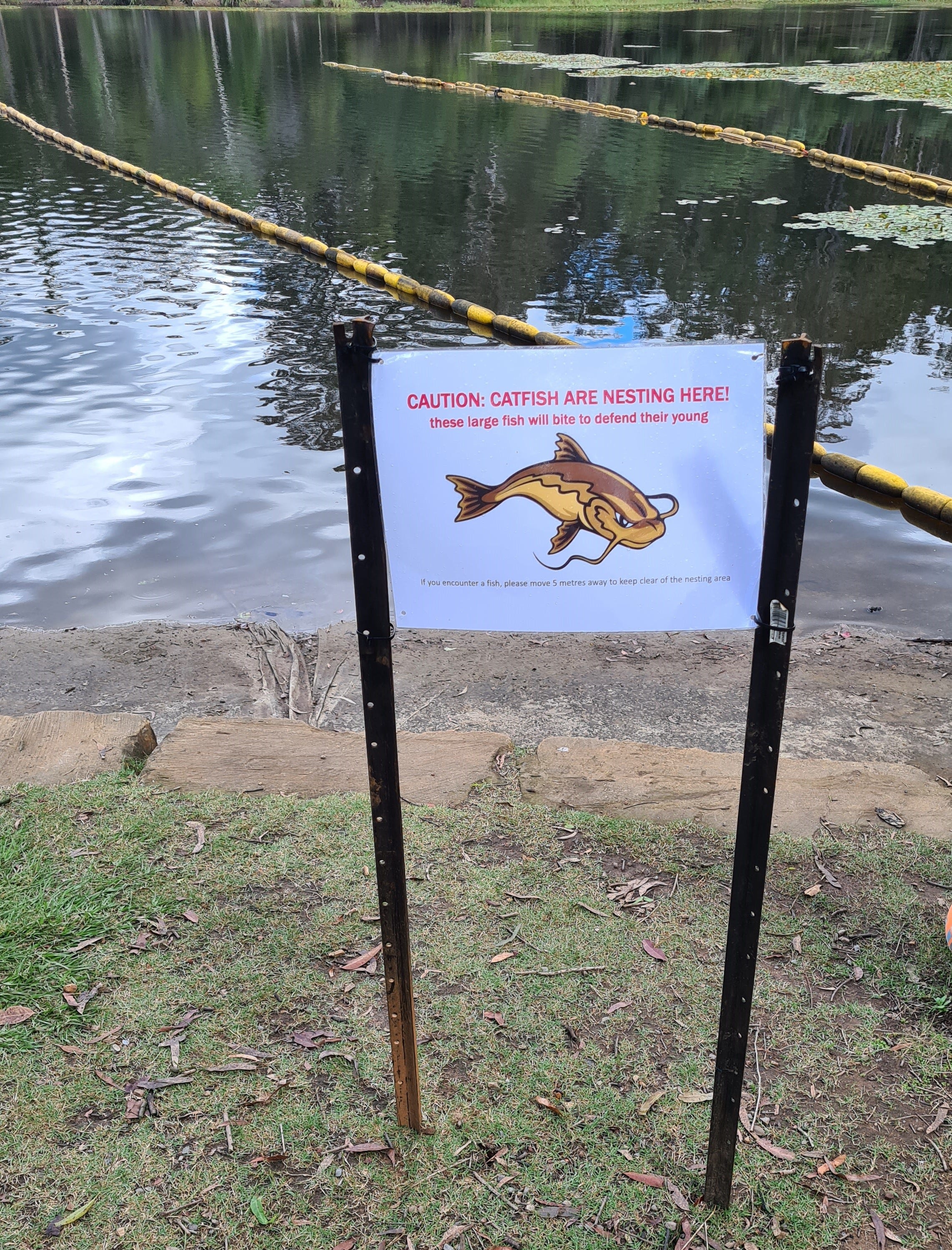
The animal kingdom, plants and aquatic species are superb defenders of their boundaries. Dogs bark when we enter their homes and in Australia, cyclists and walkers are keenly aware of magpies swooping innocent passersby during spring. In the same way, the catfish passionately upheld its boundary to protect its young by biting me.
People, other living things and the earth as a whole all have a carrying finite capacity. Staying within this capacity helps keep optimal health. If someone or something’s load increases, then more resources are required to prevent them becoming depleted. We all have our own unique capacity, which changes over time, as does the earth. Boundaries can help to enforce these carrying capacities. Planetary boundaries help keep the various ecosystems healthy; our own boundaries help us to function within our energy and time contraints in any given moment.
According to the Stockholm Resilence Centre, we have now exceeded five out of nine planetary boundaries:
Biogeochemical flows - flows of nitrogen and phosphorus off land
Land system change
Climate change
Biosphere integrity - biodiversity loss and extinctions
Chemical pollution and the release of novel entities, including plastic
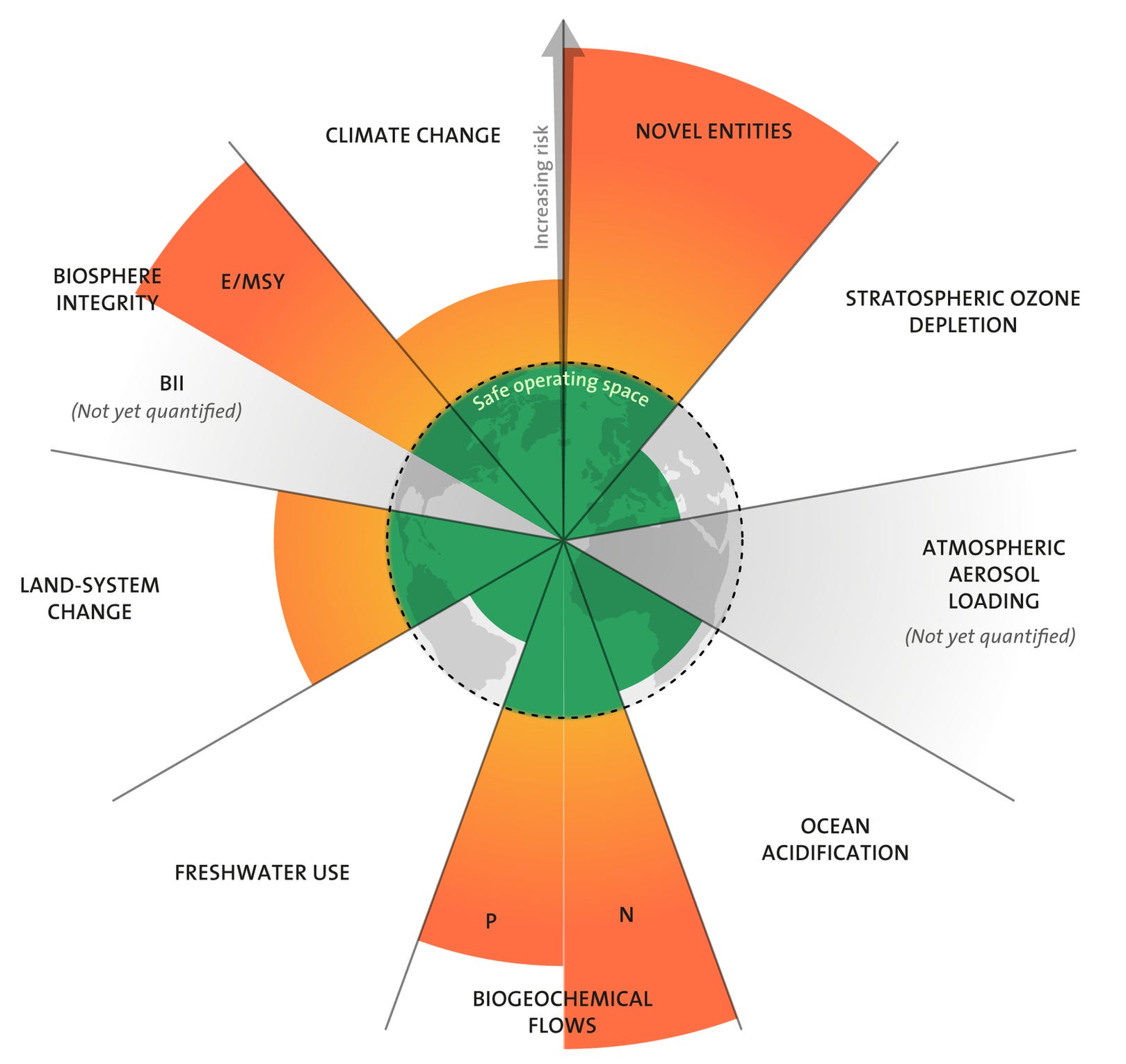
We are failing to maintain the earth’s ecosystems within boundaries which ensure that resources can be regenerated and replenished as they are used. Simultaneously, many of us are also feeling depleted and overwhelmed internally, as we take on greater loads than we can healthily manage. When we exceed our capacity, we may become tired, burnt out, injured or sick. Similarly, the planet is suffering under the weight we are placing upon it, becoming degraded and polluted, with reduced capacity for regeneration, recycling nutrients and waste and restoration.
Individually, we must be aware of our own limited resources, such as time and energy, and create boundaries which favour optimal health and well being. Healthy boundaries in relationships, work and other parts of our lives can help us to prioritise what is important for us, the things which are essential for us to thrive and nurture ourselves. We can start to define boundaries through reflecting on our values and the things which bring us joy or aliveness. Enforcing a boundary might look like not taking on extra work when we are tired, or sound like “Sorry I can’t make it to your dinner party after all”.

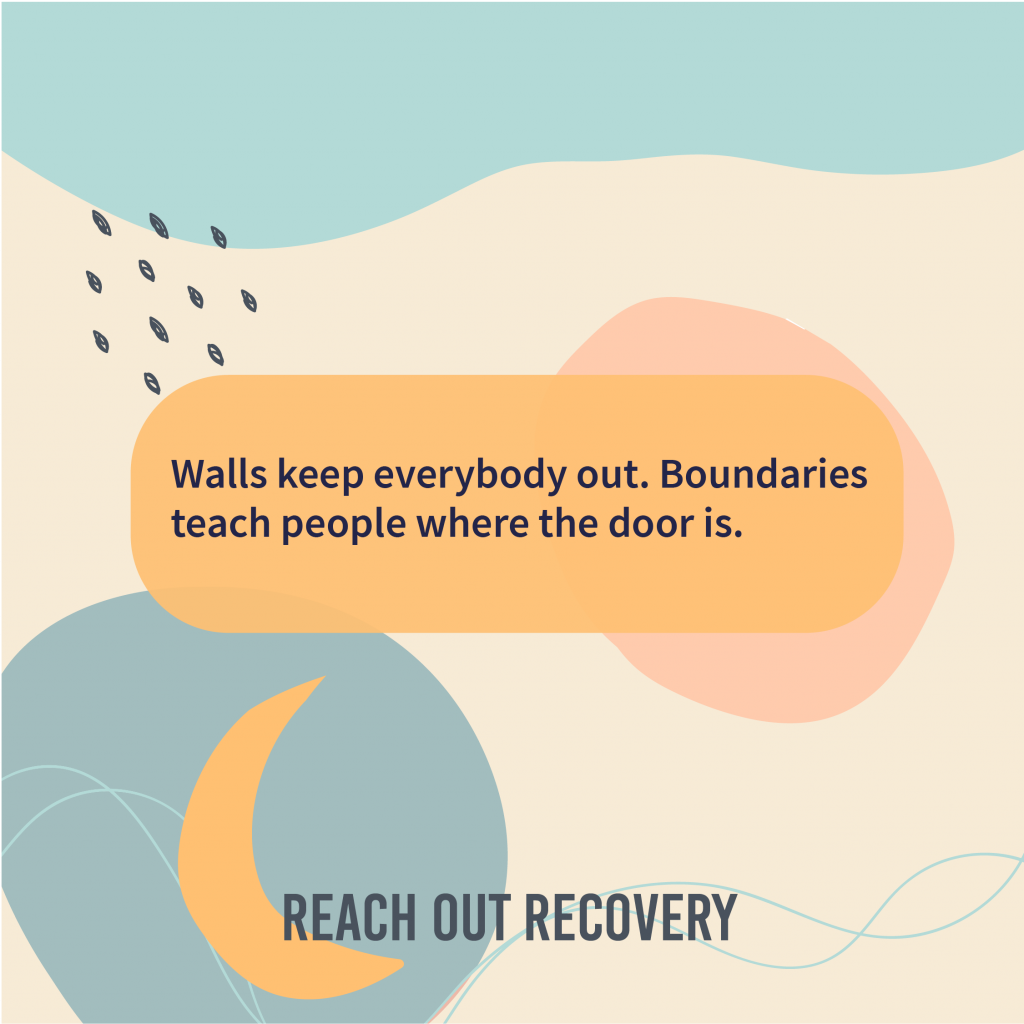
Boundaries are not barriers, they can have connective paths. Just as our skin forms a protective boundary between our body and everything external to it, air can still move in and out of our bodies through our mouths and noses, connecting our internal ecosystem with the external world. Boundaries don’t have to be fixed; they can evolve and change over time. Just like a sandy coastline which separates the ocean from the land, this boundary shifts over time as storms erode and redeposit sand on the beach. So too can our own boundaries adjust as our energy and time resources change.
Boundaries are essential for health, stability and well being. We must create and maintain our own boundaries while being cognisant of the role that we, as individuals and citizens, play in helping to preserve our planet’s boundaries, which support all life on earth.
Arohanui, lots of love
Aleisha
P.S. there’s no long term damage to my foot from the catfish. I hope the catfish babies also fared ok.
Love this. And I didn't know that about our planet!